DermaPetTrack · Public product overview
Making visual follow-up easier to retrieve, compare and discuss over time.
My end-to-end responsibility
Problem discovery · User research · Product definition · Requirements and prioritisation · Figma workflow design · Beta delivery · Usability review · Product iteration
01 · Why I created it
Visual follow-up breaks down when reference images are missing or disconnected from clinical context.
I began with a recurring gap I observed in clinical practice, then investigated it through an exploratory owner survey, veterinary feedback, and veterinary and human-health literature. When reference images are missing—or disconnected from anatomy and time—clinicians and pet owners may struggle to see how a condition is changing, meaning improvement or deterioration can be missed or recognised late. This weakens continuity when care passes between team members, makes comparison more subjective and creates avoidable uncertainty and repeated follow-up questions.
02 · The product direction
Connect each visual record to anatomy, context and time.
Dermatology provided the first use case because progress is often slow, subtle and highly dependent on visual comparison. DermaPetTrack structures serial images and follow-up information into an anatomically anchored longitudinal record designed around clinic-to-home continuity.
03 · The core workflow
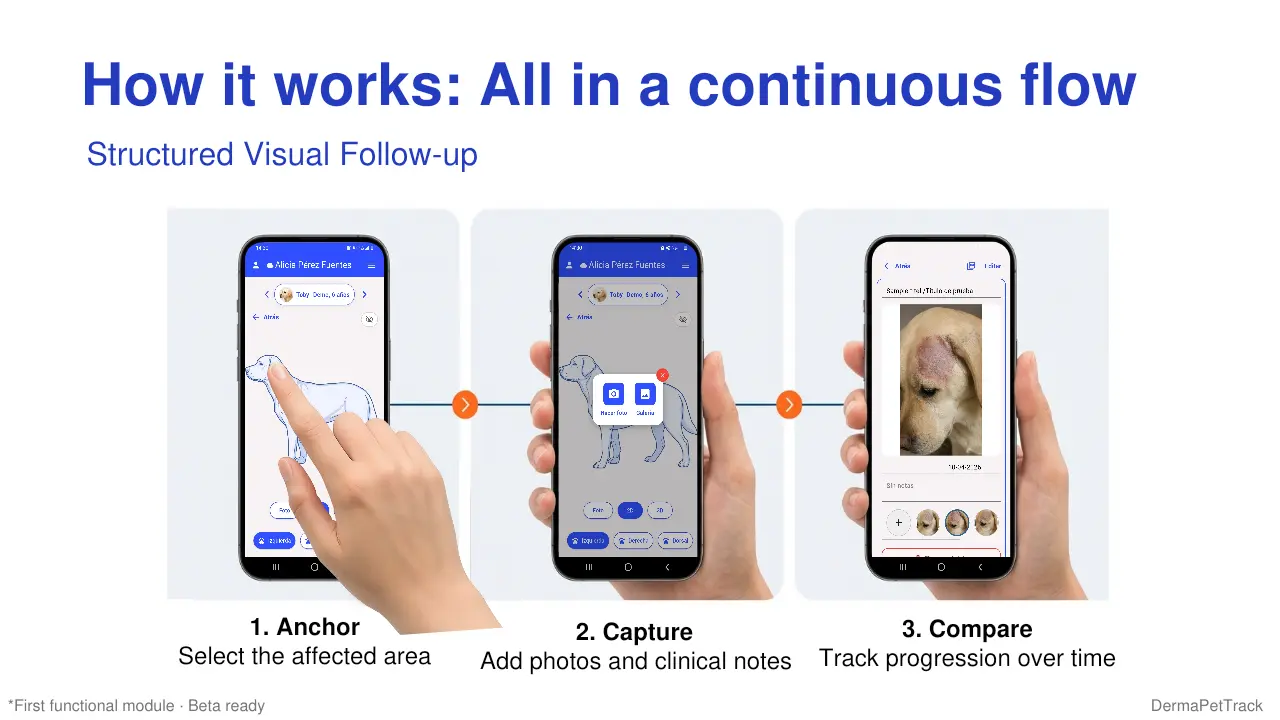
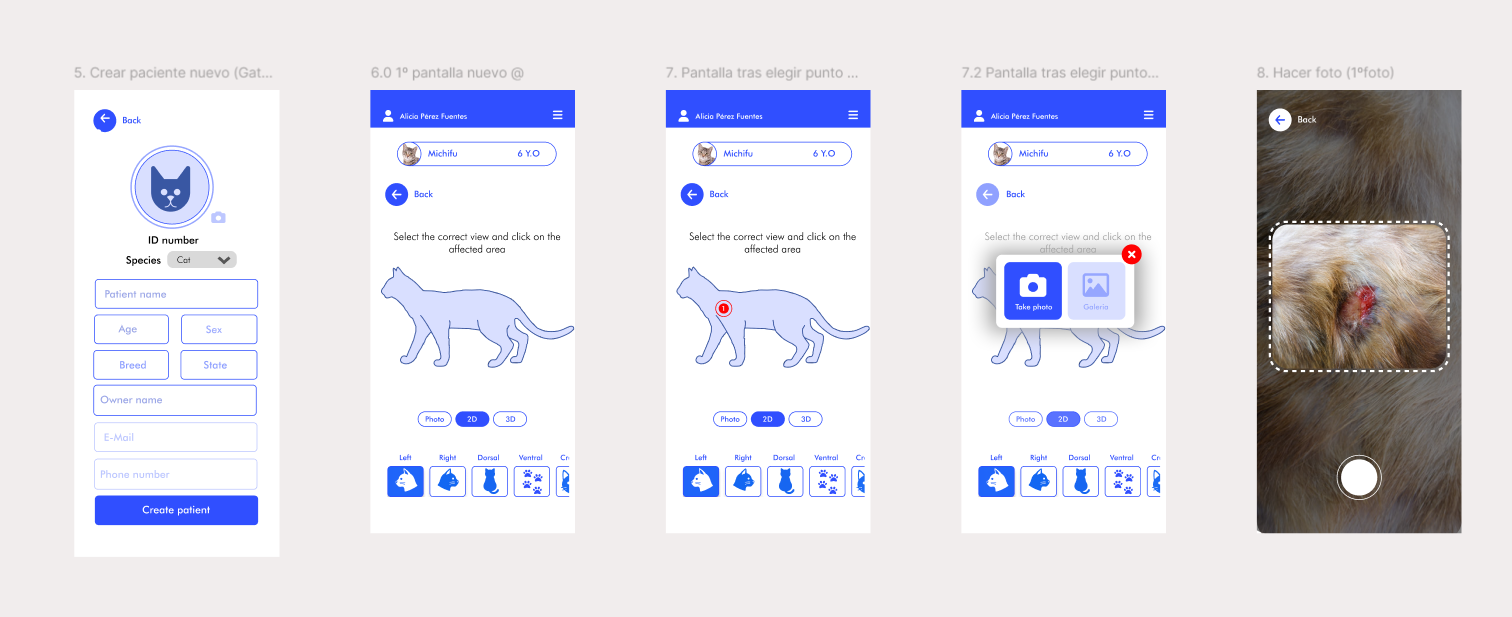
Anchor → Capture → Compare.
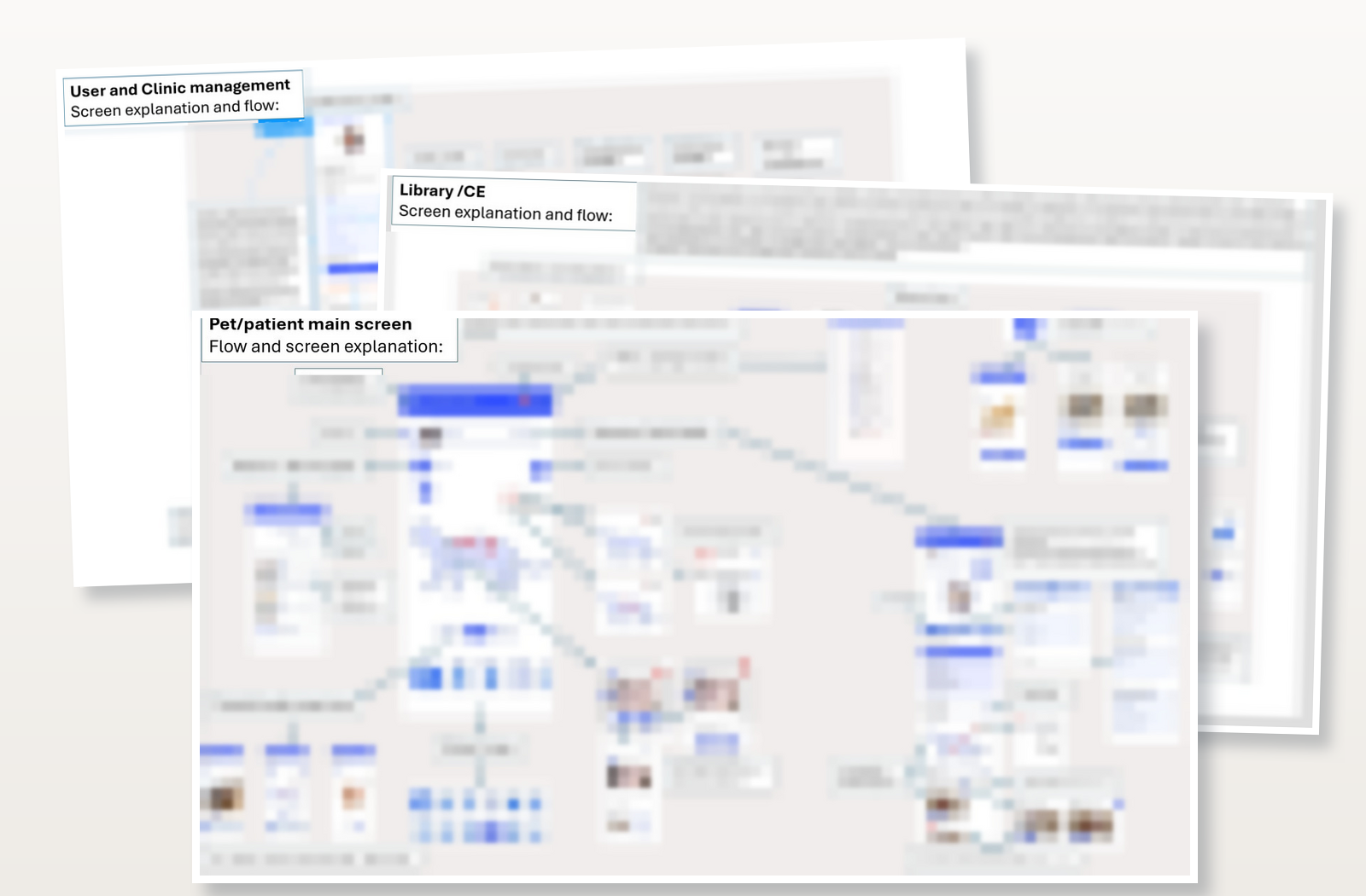
A simple foundational flow helps users locate the area, record relevant evidence and return to the same clinical context over time.